Eden Krause · 30 September 2026
Lessons from Enterprises That Navigated Major Tech Stack Changes Without Losing Ground in Search Results
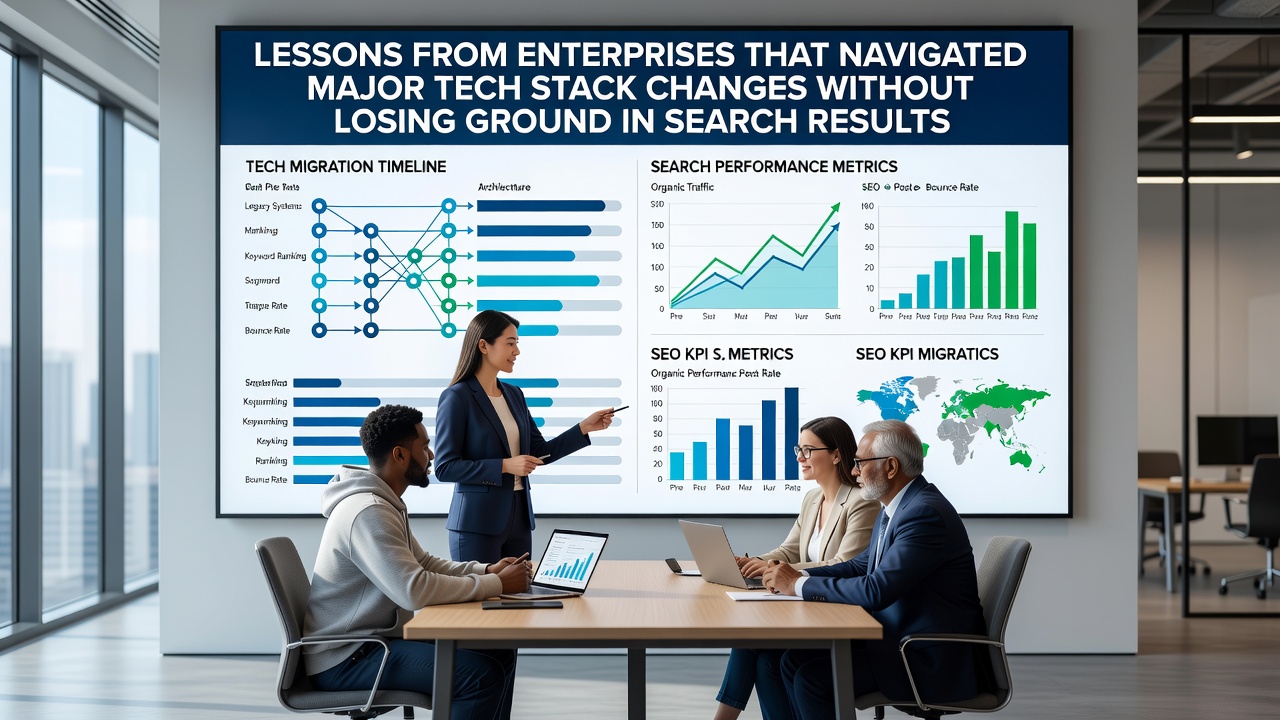
Enterprises across multiple industries have executed major shifts in their technology stacks, including moves from legacy content management systems to modern cloud platforms and from monolithic architectures to microservices, all while preserving organic search visibility. These transitions often involve updates to hosting environments, database structures, and front-end frameworks, yet some organizations have documented stable or even improved rankings throughout the process.
Strategic Preparation Before Any Infrastructure Shift
Teams that succeeded began with comprehensive audits of existing URL patterns, internal linking structures, and crawl budgets, which allowed them to map every critical path before changes occurred. Data from multiple case studies shows that organizations conducting pre-migration inventories of indexed pages reduced unexpected ranking fluctuations by substantial margins compared with those that skipped this step. Planning also incorporated parallel environments where new stacks could run alongside legacy systems, enabling testing of render speeds, mobile responsiveness, and structured data implementation without disrupting live traffic.
September 2026 brought heightened focus on AI-driven search features from major engines, prompting many enterprises to align their migration timelines with updated indexing protocols that emphasize entity understanding and real-time content freshness. Those who synchronized their stack updates with these evolving signals maintained stronger performance because they preserved semantic markup and page experience metrics during the handover.
Preserving Core SEO Elements Throughout the Changeover
Successful migrations emphasized exact preservation of URL hierarchies whenever feasible, supplemented by precise 301 redirect maps that transferred equity from old addresses to new ones without creating chains or loops. Observers note that enterprises which automated redirect validation through custom scripts caught errors early, preventing temporary drops in discovery rates that often accompany manual processes. In parallel, they maintained consistent XML sitemap submissions and robots.txt configurations across both old and new environments to ensure continuous crawler access.
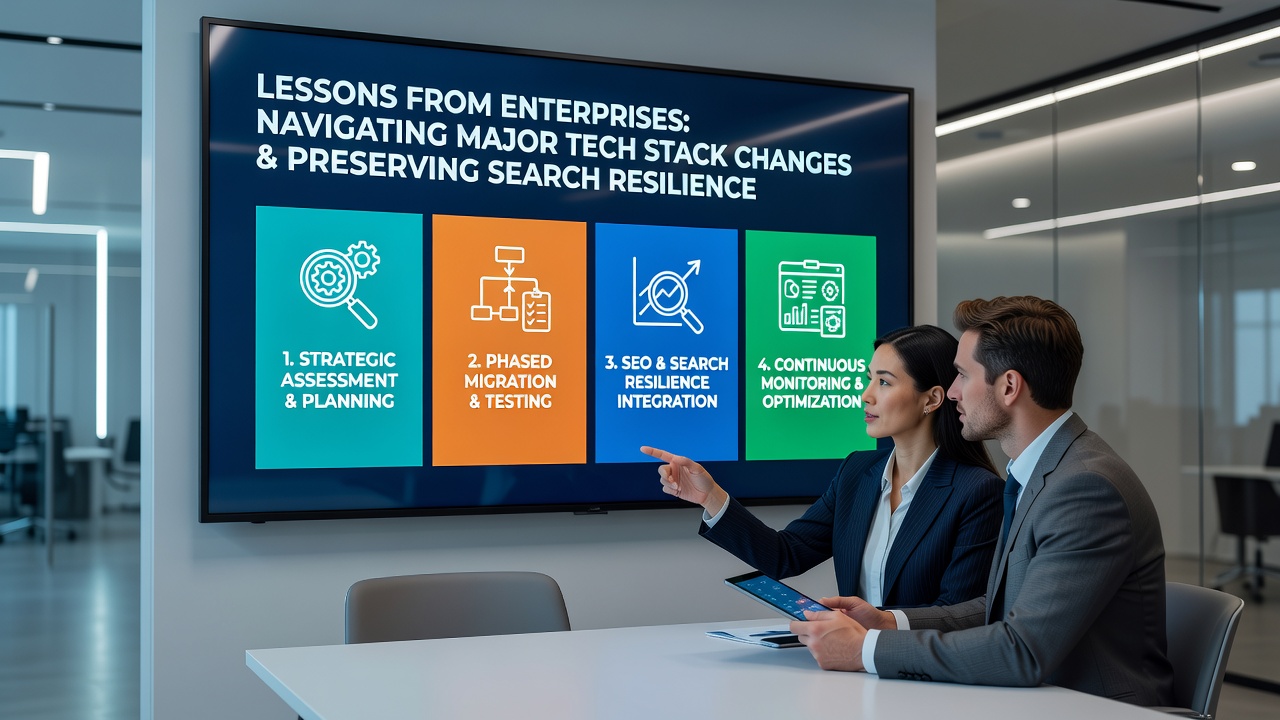
One retail enterprise shifted its entire e-commerce platform from a traditional on-premise CMS to a headless architecture while keeping product URLs identical and layering server-side rendering for JavaScript-heavy components, which helped it avoid the common indexing delays associated with client-side rendering changes. Another financial services firm documented how phased rollouts, starting with low-traffic sections before scaling to core pages, allowed real-time monitoring of crawl frequency and keyword positions throughout each stage.
Post-Migration Monitoring and Adjustment Protocols
After cutover, organizations deployed enhanced tracking that combined search console data with server log analysis and third-party rank tracking tools to identify anomalies within hours rather than days. Researchers discovered that rapid identification of pages experiencing sudden crawl reductions enabled quick fixes such as adjusting internal link velocity or refreshing sitemap priorities. External validation through tools that simulate crawler behavior proved especially useful for confirming that new tech stack elements, like updated CDN configurations, did not inadvertently block resource loading.
According to standards documented by the World Wide Web Consortium, maintaining consistent schema markup and accessibility attributes during infrastructure updates supports continued alignment with search engine expectations. Figures from industry reports further reveal that enterprises incorporating regular post-migration audits of Core Web Vitals sustained their positions more effectively than those that treated the migration as a one-time event.
Common Patterns Across Documented Success Stories
Enterprises that avoided ranking loss shared several operational traits: they retained specialized SEO personnel throughout the project rather than delegating entirely to development teams, and they established clear communication channels between technical and marketing stakeholders. One manufacturing company that transitioned its customer portal to a new backend framework used A/B testing on redirect performance and discovered that preserving query parameters in certain dynamic URLs prevented traffic leakage that competitors experienced during similar moves.
Additional examples include media organizations that migrated content delivery networks while simultaneously updating image optimization pipelines, which kept page load times stable and protected against the ranking penalties sometimes triggered by slower delivery after stack changes. These cases demonstrate that attention to ancillary technical factors, beyond the core platform itself, often determines whether search visibility holds steady.
Conclusion
Enterprises that have completed major tech stack transitions without search setbacks consistently demonstrate the value of thorough pre-planning, meticulous preservation of existing signals, and continuous post-launch observation. Data shows these practices enable organizations to modernize their infrastructure while protecting the organic visibility built over years. As platforms evolve further in response to new search technologies, the patterns established by these successful migrations continue to offer measurable guidance for similar projects ahead.